
Digital sovereignty is increasingly being reframed across Africa not as a question of control alone, but as a strategy for building infrastructure capacity, enabling trusted data exchange, and positioning the continent to capture value from the global digital economy.
That message came through strongly across two high-level sessions at GITEX Africa in Marrakech, where policymakers, infrastructure investors, and cloud ecosystem leaders argued that sovereignty will depend less on declarations and more on the deployment of sovereign cloud platforms, regional data centers, interoperable data spaces, and national talent pipelines.
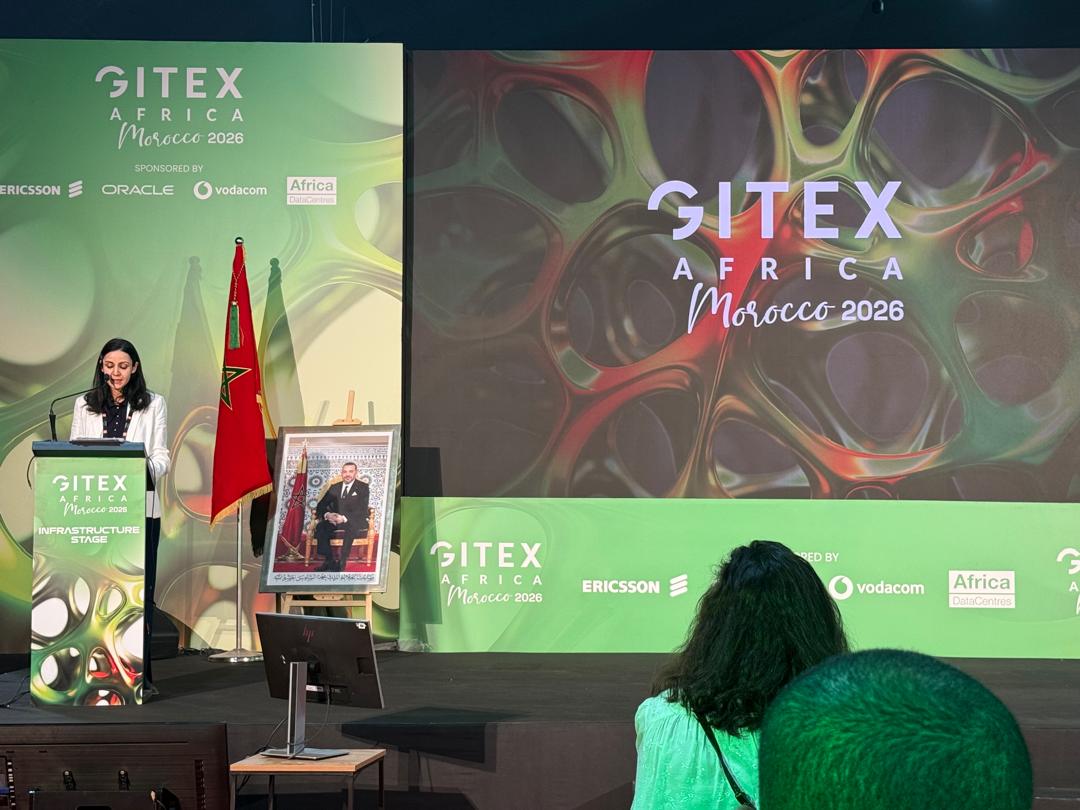
In a keynote on Harnessing Digital as a Lever for Technological Sovereignty and Innovation, Morocco’s Minister of Digital Transition and Administration Reform, M. Mohammed Amine Lahrache, represented by Latifa Guerrouj emphasized that sovereign cloud environments and performance-neutral data center infrastructure are becoming central pillars of national competitiveness. The strategy places particular weight on talent domestication through large-scale upskilling and reskilling programs, supported by stronger linkages between universities, accelerators, and industry ecosystems to enable the emergence of national and continental technology champions.
The Ministry also highlighted the importance of regulatory certainty and trusted governance frameworks in protecting citizens while enabling digital market expansion. For Morocco, sovereignty increasingly means ensuring that sensitive national data is hosted locally, while simultaneously building startup ecosystems capable of scaling across African markets. The country is investing heavily in digital infrastructure as part of a broader effort to position itself as a continental digital hub.
The theme continued in an opening fireside discussion titled Monetizing Sovereignty: Turning Secure Data Sharing into Economic Power, where speakers explored how sovereignty frameworks can be translated into deployable infrastructure and investment-ready digital ecosystems.
Vivek Mittal, Chief Executive Officer of the Africa Infrastructure Development Association (AFIDA), argued that digital sovereignty is becoming a prerequisite for attracting large-scale infrastructure financing across emerging markets. Trusted digital environments, he suggested, create the confidence required for long-cycle investments in data centers, connectivity corridors, and cloud platforms that underpin modern industrial growth.
Ulrich Ahle, Chief Executive Officer of the Gaia-X European Association for Data and Cloud, described sovereignty as the ability to participate in trusted digital ecosystems rather than the requirement to build all technologies domestically. According to him, Gaia-X has developed open compliance frameworks and sector-specific data spaces to support secure data exchange across industries such as healthcare and tourism, offering models that could be adapted to African markets seeking interoperability without fragmentation.
Zaki Narjisse, Chief Executive Officer of NETOPIA, emphasized that sovereignty ultimately depends on control over how infrastructure and software systems are deployed and governed. Rather than replacing global platforms, the challenge for many countries is to move from opaque “black-box” technology dependencies toward environments where governments and enterprises retain visibility and operational authority over their data and infrastructure.
Speakers also highlighted the importance of extending sovereignty strategies beyond major cities. Morocco’s national programs linking smart city development with rural innovation initiatives, including hackathons that engaged thousands of engineers on climate resilience and water management challenges, reflect a broader shift toward treating sovereignty as a territorial infrastructure issue rather than a metropolitan one.
At the continental level, fragmentation remains a risk. With more than 50 national digital policy environments emerging across Africa, participants stressed the importance of coordination around shared standards and interoperable frameworks to avoid duplicating infrastructure investments and slowing cross-border digital trade.
European experience offers one possible pathway. According to Gaia-X, more than €3 billion has already been invested in open digital sovereignty architectures designed to support trusted data sharing across jurisdictions, with elements of those frameworks potentially adaptable to African contexts.
Across both sessions, speakers emphasized that technological sovereignty is no longer defined primarily by where technology is produced, but by where data is stored, how infrastructure is governed, and whether countries can build the institutional and technical capacity required to support secure digital markets at scale. For African economies seeking to expand digital trade under frameworks such as the AfCFTA Digital Trade Protocol, sovereignty is increasingly becoming an infrastructure agenda as much as a policy one.