
As global capital pools reassess digital infrastructure allocations, Nigeria’s foundational carrier-neutral hub is rewriting the pan-African playbook. The discourse surrounding African digital infrastructure is historically supply-driven, frequently dominated by sweeping announcements of multi-country rollouts and speculative gigawatt roadmaps. Yet, infrastructure investors and hyperscale operators understand that the gap between a project announcement and operational live load can span years. In the highly competitive West African market, execution capability has become the ultimate differentiator.
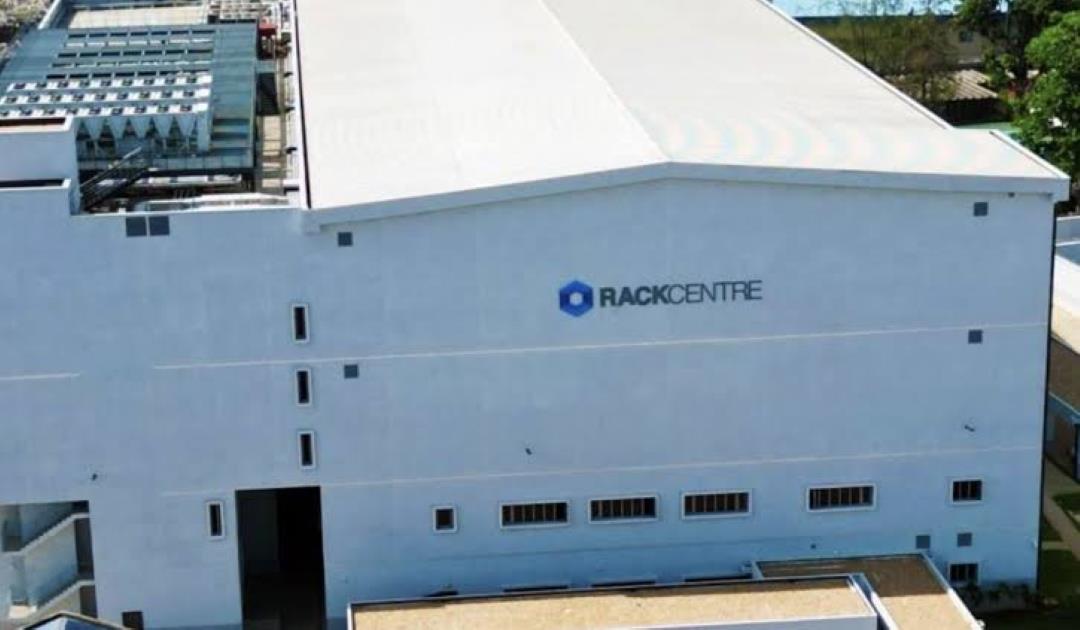
Standing in this shift is Rack Centre, one of Nigeria’s pioneer data center operators that has anchored its capital strategy firmly inside Nigeria, scaling its aggregate available capacity to 13.5MW. This deliberate consolidation occurs at a time when the macroeconomic landscape demands extreme resilience, predictable power costs, and precise alignment with emerging data sovereignty policies.
In this exclusive interview, Lars Johannisson, Chief Executive Officer, Rack Centre, unpacks the structural reality of their newly commissioned L2 facility. Moving past the boilerplate marketing metrics, he details the engineering choices behind their 100% gas-and-solar energy mix, the operational philosophy that has preserved 14 years of uninterrupted uptime, and how true modularity enables a single facility to seamlessly bridge the distinct demands of local tier-one banks and global hyperscalers.
Temitope: Industry veterans often note that scaling in African markets requires enduring highly volatile operational environments. Rack Centre recently brought its 12MW L2 facility online, yet your strategy remains heavily concentrated on Nigeria rather than a multi-country footprint. Why double down here?
Lars Johannisson: It comes down to a choice between speculative narrative and proven execution. We are standing on a legacy that began in 2013. Back then, building a carrier-neutral data center in Lagos was not an obvious business case; it required visionary local shareholders to prove the model. Over 14 years, that foundation allowed us to cultivate the densest ecosystem of carriers, fintechs, and subsea cable interconnections in the region.
When we look at capital allocation, we prioritize where the structural upside is absolute. Nigeria is structurally positioned as the powerhouse of West African digital economy. While the classic pitch relies on macro population metrics, the true institutional opportunity lies in bringing the massive segment of the economy currently dependent on local hard drives into a formalized cloud architecture. This domestic opportunity is vast enough to satisfy our entire growth trajectory. We prefer to dig where we stand and deliver actual capacity rather than spreading capital thinly across speculative jurisdictions.
Temitope: Institutional investors are focused on asset integrity and customer retention. How do you maintain operational consistency across these growth phases without disrupting your existing client base?
Johannisson: In our organization, uptime is treated as a religion, not a compliance exercise or marketing slogan. We have maintained 14 years of continuous operations without a single second of downtime. That track record is built on extreme operational discipline and deep client relationships. Our business stands firmly on two distinct pillars: a foundational, interconnected ecosystem of domestic financial institutions and fintechs, alongside the major global cloud platforms.
We do not build speculatively and wait for hyperscalers to arrive; we co-develop the ecosystem alongside our existing tenants. Success for us is defined by preserving that institutional trust daily, ensuring that when an enterprise co-locates with us, they are securing a global standard of resilience identical to facilities in Europe or South Africa.
Temitope: Hyperscale operators require massive, uniform environments, while domestic commercial banks operate on entirely different power densities. How does the architecture of the new facility handle these conflicting demands without compromising efficiency?
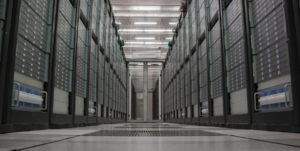
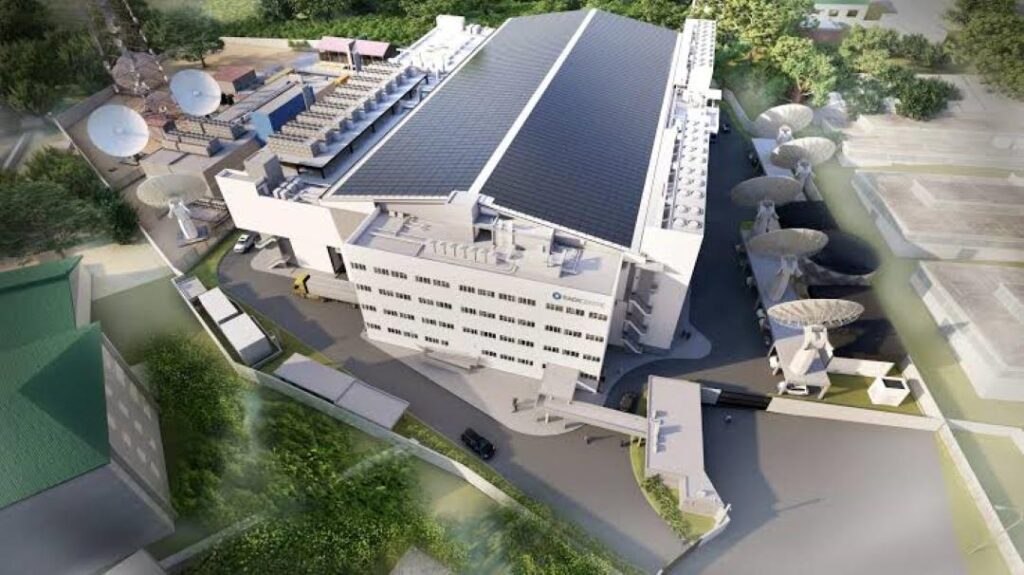
Johannisson: The facility is engineered for absolute modularity. The architecture of L2 features two floors split into six independent 2MW data halls, supported by four discrete Meet-Me Rooms (MMRs). This layout allows us to isolate workloads completely, running an independent hyperscale environment on the lower floor while operating a standard retail colocation environment on the upper floor via entirely separate tracks.
The design fluidness extends directly to our cooling and density configurations. Local banking infrastructure typically hovers between 4kW and 11kW per rack, which we manage through optimized room air cooling. However, the structural load capacity is ready for tomorrow’s technology. If a client requires high-density compute or GPU infrastructure exceeding 100kW per rack, we can integrate a hybrid solution, introducing localized liquid-to-liquid Coolant Distribution Units (CDUs) directly into the environment. We have built a facility that satisfies the realities of the current local market while remaining fundamentally compatible with the next generation of global cooling demands.
This technical fluidness is also reflected in our core operational metrics. While our legacy L1 facility established an impressive Power Usage Effectiveness (PUE) of 1.45, the new L2 infrastructure drops this further to a designed PUE of 1.35, making it the most energy-efficient facility currently operating in the market. Furthermore, both facilities are completely decoupled from the national grid, relying entirely on localized, modular gas generation to guarantee uninterrupted reliability.
Temitope: Power remains the primary constraint for data center developers in frontier markets. You have made the unorthodox decision to isolate your facilities entirely from the national grid. What is the strategic rationale behind this?
Johannisson: Relying on a complex national grid creates unacceptable operational variables. Our 100% uptime is achieved because we own and manage our complete power generation loop. In 2022, we initiated a structural migration away from diesel, and today we run 100% on gas.
This shift dramatically insulated our operational cost base from global diesel price volatility, offering predictable underlying margins. But we are moving further on the sustainability curve. We currently have 700kW of solar PV on our rooftops, and we are advancing plans for a nearby 6MW solar park. This will transition our infrastructure to a 50% renewable energy mix. Hyperscalers and international investors are no longer looking just at energy efficiency; they are auditing the actual carbon footprint of the energy mix.
Temitope: Beyond physical infrastructure, there is an increasing push toward data localization. Rack Centre actively contributed to the Nigerian Information Technology Development Agency (NITDA’s) National Sovereign Cloud Initiative. How do you view the role of policy in stimulating actual local demand?
Johannisson: A mature digital ecosystem requires a collaborative approach to policy. The National Sovereign Cloud Initiative is the product of intense collaboration between NITDA and industry peers. The resulting framework strikes a healthy balance between supporting local industry and enforcing data security, avoiding the pitfalls of over-regulation.
Industry estimates indicate that an overwhelming majority of Nigerian data resides in offshore facilities, which presents a clear national vulnerability. Establishing long-term sovereignty policies encourages corporate and government enterprises to repatriate their compute workloads. We are already seeing a distinct shift in market behavior, with organizations auditing their data residency and moving workloads home to secure lower latency and regulatory compliance.
Ultimately, governments must lead by example. True digital inclusion and market stimulation happen when state and federal operations fully digitalize their workflows, transforming into anchor tenants of the domestic data center ecosystem.
Editor’s notes
As West Africa’s digital infrastructure matures, the interview with Lars Johannisson underscores that true competitive advantage belongs to operators focused on execution and structural efficiency over raw scale. By decoupling from the erratic local grid, embracing an aggressive gas-to-solar energy strategy, and delivering a modular platform optimized for both local banking compliance and global hyperscale requirements, Rack Centre has established a sustainable blueprint for regional digital sovereignty. For institutional investors and policy makers alike, this operational approach demonstrates how localized infrastructure can successfully mitigate frontier market risks while laying the groundwork for long-term economic integration.