

Africa’s digital infrastructure debate is often dominated by the expensive elements: subsea cables, national backbones, metro fiber, data centers, cloud regions, power plants and, increasingly, AI-ready compute. These are all necessary. But one of the continent’s most cost-effective infrastructure upgrades may be far less visible: getting more African networks to exchange traffic locally.
This is the basic promise of peering. When internet networks connect directly, often through Internet Exchange Points, traffic that should stay local does not need to travel through expensive international transit routes before coming back. The Internet Society describes peering and IXPs as a way for networks to exchange traffic locally, reduce latency, lower costs and improve resilience by avoiding unnecessary long-distance routing.
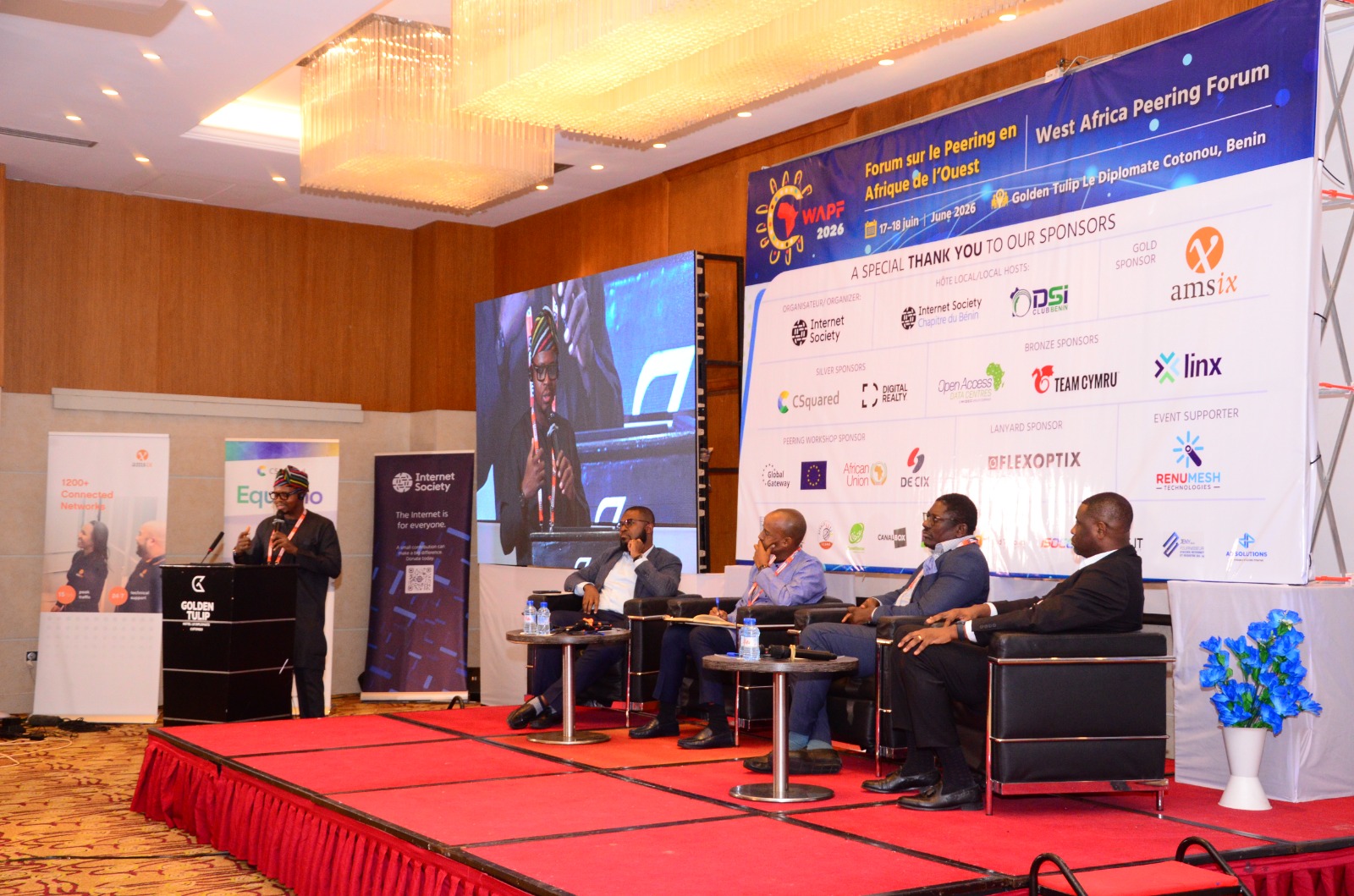
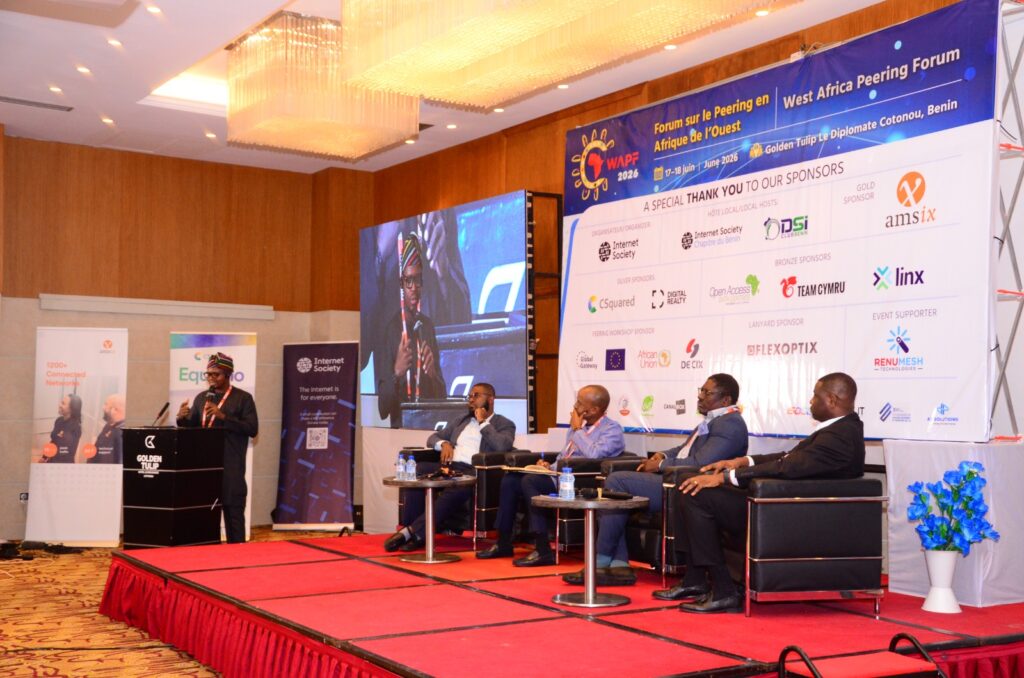
At the West Africa Peering Forum, this point came through clearly during the Africa Hyperscalers-hosted session on Deepening ASN and IPv6 Adoption with Enterprises in Africa. The discussion began with a broader concern: Africa has built visible infrastructure, but too many of its networks remain poorly routed, dependent on upstream providers and invisible to the wider internet ecosystem.
Africa now has about 60 subsea cables, 145 cable landing points, 1.5 million kilometres of fiber, around 150 CDN and cloud points of presence, and roughly 600MW of live data center IT capacity, according to figures cited during the panel. Yet the continent has only about 2,800 assigned ASNs, representing roughly 2.2% of globally assigned Autonomous System Numbers. ASNs, as the session framed it, are identity numbers for networks online; they allow networks to be recognised, reached and routed across the internet.
That gap matters because local peering depends on networks being visible, reachable and willing to exchange traffic. If banks, universities, government systems, ISPs, cloud platforms and enterprise networks remain hidden behind a few upstream providers, the local internet ecosystem becomes less efficient. Traffic that could move across town, across a local exchange, or between neighbouring networks may instead travel through distant transit routes.
The result is a kind of avoidable infrastructure waste. The continent is paying for international movement when the better, far cost-effective and efficient solution is local exchange.
Olawale Owoeye, Chief Executive Officer, Cedarview Communications, a Nigerian Internet Service Provider, made the cost argument directly. Speaking about universities and other institutions that lack ASNs or optimised routing, he said poor routing makes internet more expensive “for all of us.” If a university routes traffic properly, he argued, it becomes more visible to Internet Exchange Points and local cache providers. That visibility can justify placing content closer to users, reduce transport costs and lower costs for the broader community.
This is one of the overlooked economics of peering. A local cache near a university community can reduce the need to haul traffic over long-distance or international routes. A bank that can peer locally can serve customers faster and more reliably. An ISP connected to an exchange can reach other local networks without paying for every bit of traffic to transit through a foreign hub. A content provider can place infrastructure where there is visible demand.
The evidence from Africa supports this. In a 2020 report, the Internet Society found that Kenya and Nigeria had moved from localising about 30% of traffic in 2012 to nearly 70% by 2020. In Kenya, KIXP grew from 1Gbps of peak traffic in 2012 to 19Gbps in 2020, with cost savings rising to about $6 million per year. In Nigeria, IXPN grew from 300Mbps to 125Gbps over the same period, with annual cost savings increasing to about $40 million.
Those numbers are important because they show that peering has measurable economic impact. It reduces the need to buy expensive international capacity for local traffic. It improves latency. It makes local content hosting more attractive. It helps justify additional investment by CDNs and cloud providers.
Earlier research commissioned by the Internet Society showed similar effects. In Kenya, KIXP reduced latency from about 200–600 milliseconds to 2–10 milliseconds on average and helped ISPs save nearly $1.5 million per year on international connectivity. In Nigeria, IXPN reduced latency from around 200–400 milliseconds to 2–10 milliseconds and helped national operators save more than $1 million per year on international connectivity at the time of the study.
For a continent where broadband affordability remains a central development challenge, these are not marginal gains. They are infrastructure gains achieved without waiting for a new subsea cable, a new cloud region or a new national backbone. They come from using existing infrastructure more intelligently.
Carl Aniambossou, Chief Executive Officer, Sud Telecoms gave one of the clearest examples from Côte d’Ivoire. He described a case where a user on one local network tried to reach a server physically located nearby, but the traffic still left the country before returning. This happened despite the presence of a local exchange point. The issue was not the absence of infrastructure; it was poor configuration, insufficient local routing and weak peering practice.
That example captures the problem in plain terms: Africa has spent billions connecting itself to the world, but too much African traffic still behaves as if the shortest route between two neighbours is through another continent.
This is also why domestic capacity routes such as Lagos to Abuja can sometimes be significantly more expensive than international routes such as Lagos to London. International routes benefit from deeper competition, larger capacity volumes and more mature exchange markets, while domestic routes often suffer from limited fiber diversity, weaker aggregation, higher right-of-way costs and less efficient local traffic exchange.
The case for local peering becomes even stronger as Africa’s digital economy becomes more transactional. Banking, tax systems, education platforms, cloud services, government portals, streaming, health records, e-commerce, logistics and AI applications all require low latency and resilient connectivity. These services do not only need access to the internet. They need efficient routing inside the internet.
That is why peering should now be treated as a mainstream digital infrastructure priority, not a specialist network engineering topic.
The WAPF panel also showed that ASN adoption and peering are connected. More ASNs mean more independently visible networks. More visible networks make local peering more meaningful. More peering makes local traffic exchange more efficient. And more efficient local traffic exchange improves the economics of hosting, caching, cloud deployment and data center investment.
Aniambossou made this investment signal point directly. When a major CDN or content provider evaluates a market, it often looks at the number of active networks. In practice, that means looking at ASNs. A market with few ASNs may appear smaller or less mature than it really is, even where population, mobile usage and digital demand are substantial.
This is a serious problem for Africa. Low ASN adoption can make demand invisible. Invisible demand delays caches, cloud nodes, edge infrastructure and data center utilisation. Delayed infrastructure keeps more traffic offshore. Offshore traffic keeps costs higher. Higher costs slow adoption. The cycle reinforces itself.
Breaking that cycle does not require one single intervention. It requires a practical peering agenda.
More enterprises, universities, banks, government platforms and regional ISPs should obtain their own number resources and ASNs where they have the scale and operational need to do so. Behu Abba Bryce, Stakeholder Manager, AFRINIC argued during the panel that more African companies should become AFRINIC members, obtain their own IP resources and ASNs, and develop autonomous routing policies.
In addition, IXPs need to move beyond capital cities and become more distributed, trusted and commercially relevant. Nigeria’s IXPN growth shows what happens when an exchange becomes a real hub for local traffic rather than a symbolic facility. The next phase should be more state-level and regional interconnection, especially in markets where traffic is still hauled back to one dominant city.
Operators must actively keep routing local. Owoeye’s closing recommendation was simple: do what is necessary “to keep our traffic local, to keep our routing local, so it becomes cheaper for everybody.”
Lastly, policymakers should treat peering as a national competitiveness issue. This does not mean heavy-handed regulation. It means removing barriers to infrastructure sharing, encouraging public institutions to connect locally, supporting neutral IXPs, enabling carrier-neutral data centers and ensuring that public digital services are hosted and routed in ways that strengthen the local ecosystem.
The Internet Society’s 2026 affordability analysis reinforces this direction. It found that in 40 of 50 countries where the Internet Society Foundation supported IXP development or local peering ecosystems between 2020 and 2024, the share of income required for a basic mobile broadband package fell by more than 10%, with much larger improvements in several countries. The organisation cautioned that many factors influence affordability, but said the trend points to a common theme: stronger local internet infrastructure is associated with healthier and more efficient internet ecosystems.
That is why local peering may be Africa’s cheapest infrastructure upgrade. It does not replace subsea cables, terrestrial fiber, data centers or cloud platforms. It makes them work better. It turns capacity into efficiency. It turns local demand into visible demand. It turns isolated networks into an ecosystem.
Africa’s digital infrastructure story has focused for years on getting connected. The next chapter is about getting connected properly. More local peering will not solve every problem, but it can reduce cost, improve latency, strengthen resilience and make African markets more legible to the global cloud and content economy.
Before Africa builds more expensive pipes, it should make sure local traffic is not still taking the long way home.