

Policy clarity, infrastructure resilience and industry-led collaboration are critical to the growth of Africa’s internet ecosystem, speakers said during a panel session at the West Africa Peering Forum.
The session, titled “Policy, Regulation, and the Internet Ecosystem: Are We Enabling or Inhibiting Growth?”, was moderated by Jean Baptiste Milogo, Director, Internet Technology and Development and featured Raymond Akuetteh Bill, Acting Director, Information Technology, National Communications Authority, Ghana; Ghislain Nkeramugaba, IXP Development Expert, Internet Society; and Seraphine Bogui, Telecom Engineer, Côte d’Ivoire Internet Exchange.
Speaking on Ghana’s regulatory approach, Raymond Akuetteh Bill said the country is using policy and regulation to support digital infrastructure expansion and enable industry growth. He noted that Ghana recently replaced its previous ICT policy framework with the Ghana Digital Economy Strategy 2024, which takes account of emerging technologies such as artificial intelligence and positions the country to use technology to expand access, drive economic growth and improve government service delivery.
According to him, universal access and connectivity remain central pillars of Ghana’s digital strategy. He said the country has used liberalisation, spectrum management and a more open investment environment to deepen industry participation. Ghana currently regulates ISPs and subsea cable operators, with five subsea cables under regulatory oversight and about 40,000 kilometres of terrestrial fiber deployed by 11 operators.
Bill said resilience has become a major policy priority, especially after recent subsea cable disruptions in March 2024 exposed gaps in regional redundancy. He explained that Ghana is looking at policy measures that require operators to connect to multiple domestic fiber routes and at least one cross-border fiber provider to reduce exposure to major outages.
He added that cross-border connectivity remains one of the biggest gaps in the region. Stronger links between Ghana and Côte d’Ivoire, for example, could have reduced the impact of the March subsea cable cuts. He said ECOWAS is already discussing regional approaches to improve cross-border resilience.
Bill also stressed that Ghana’s internet ecosystem remains largely industry-led, citing the Accra Internet Exchange as an example. He said the role of the regulator is to create a conducive environment for industry-led platforms to grow. He added that Ghana is promoting infrastructure sharing, last-mile access, a dig-once policy and the integration of ducts into road construction projects to support future fiber deployment.
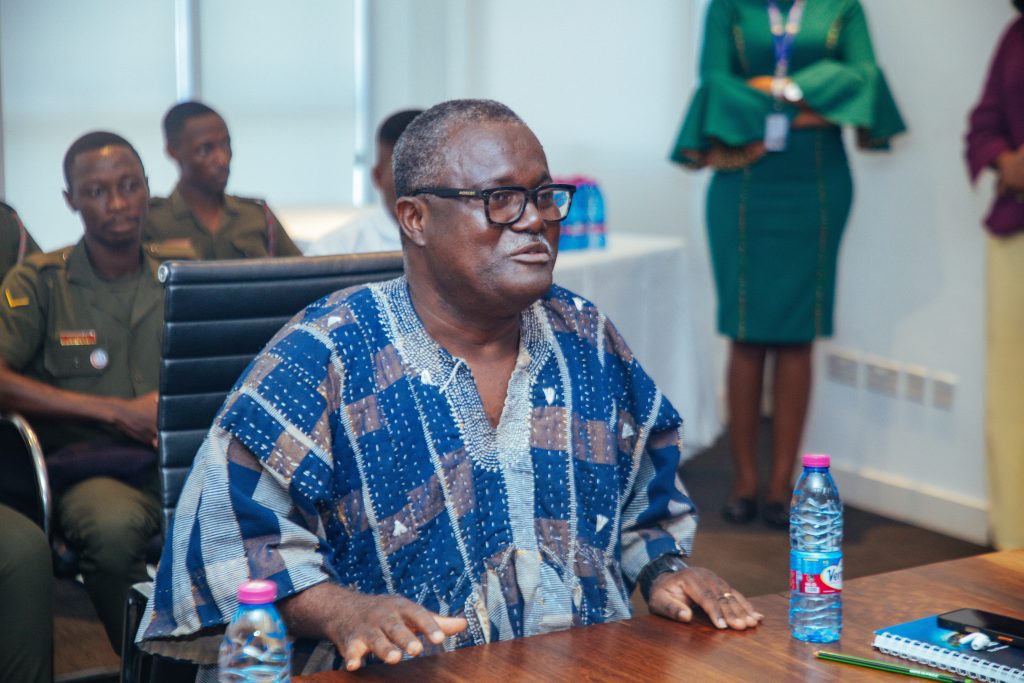
Ghislain Nkeramugaba of the Internet Society said long-term vision and policy consistency are essential to building resilient internet ecosystems. Citing Rwanda as an example, he said the country’s Vision 2020 and Vision 2030 frameworks helped guide ICT infrastructure development, digital adoption and private-sector investment.
He noted that Rwanda’s landlocked geography makes infrastructure planning even more important, as the country does not have direct access to subsea cables. According to him, Rwanda’s progress has been supported by clear national vision, policies that encourage digital adoption and sustained infrastructure investment.
Nkeramugaba also highlighted the role of Internet Exchange Points in strengthening local traffic exchange. He said Rwanda’s exchange is managed by a non-profit entity responsible for community infrastructure, while the regulator helped lay the foundation for its development. He cited the World Cup as an example of how digital demand can rise quickly, noting that traffic at the exchange doubled to about 24Gbps within one week during the tournament.
Seraphine Bogui of the Côte d’Ivoire Internet Exchange spoke about the country’s experience in developing its IXP ecosystem. She said the exchange is state-owned but structured to promote inclusion through a tripartite charter that supports cooperation among stakeholders.
The discussion also raised questions about access models for IXPs, including whether networks should be able to bring their own fiber directly to an exchange point rather than going through a single provider or gatekeeper. Participants also asked whether Côte d’Ivoire plans to introduce a route server to make peering easier and more efficient for networks connecting to the exchange.
The panel concluded that while regulation can enable growth, weak policy coordination, limited cross-border connectivity, restricted access models and insufficient infrastructure sharing can inhibit the development of a stronger regional internet ecosystem. Speakers agreed that West Africa’s next phase of internet growth will depend not only on more infrastructure, but on better policies, more open interconnection, stronger redundancy and closer collaboration between regulators, operators, IXPs and regional institutions.