

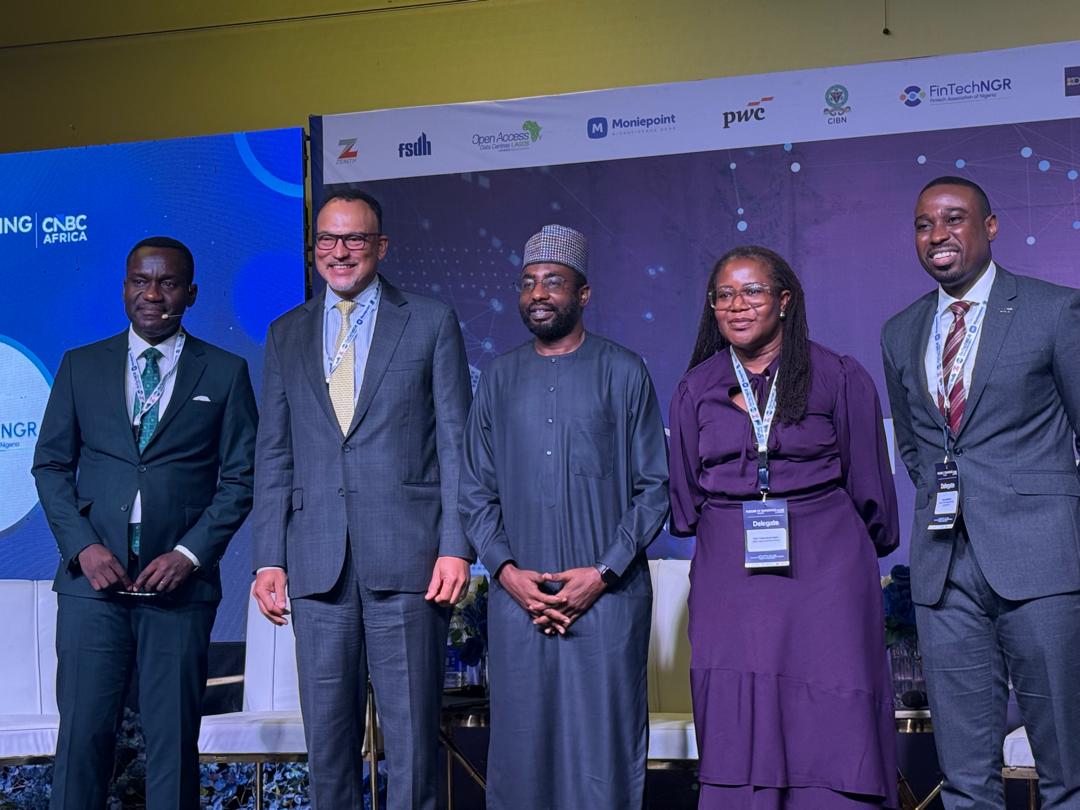
Nigeria’s banks are racing toward artificial intelligence, but the bigger challenge is whether the infrastructure beneath the sector is ready.
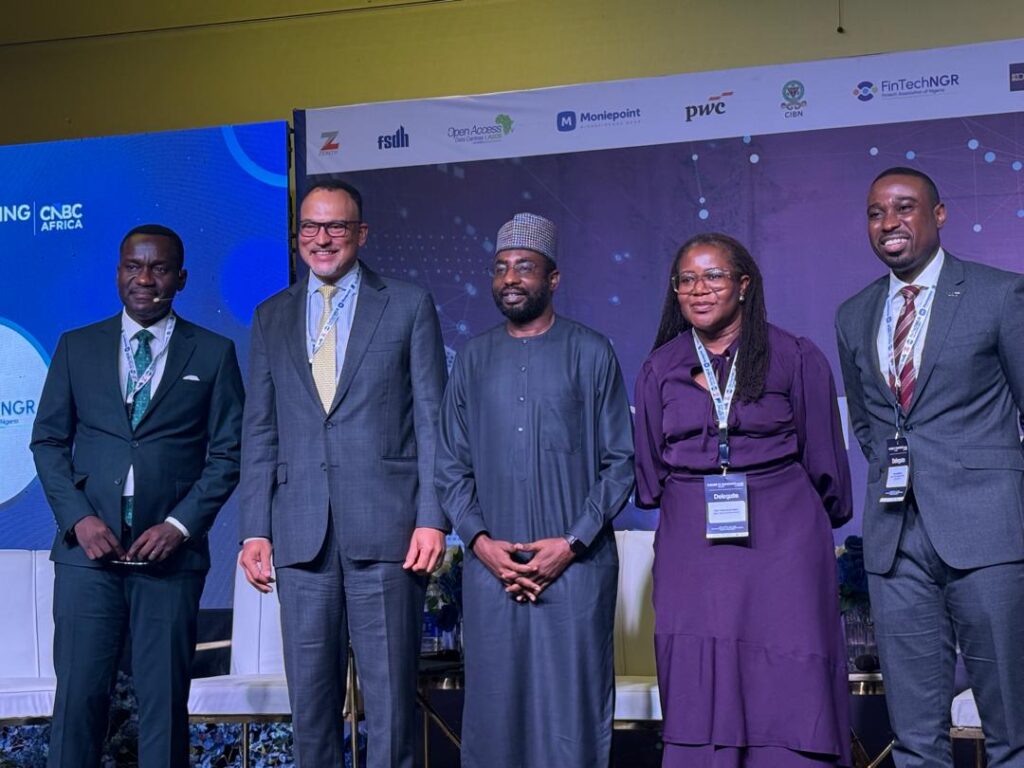
That was the central message from “The Efficiency Frontier: AI, Regtech and Cyber Resilience,” a session at CNBC Africa’s Future of Banking Nigeria, featuring Ayotunde Coker, Chief Executive Officer, Open Access Data Centres; Dr. Kashifu Inuwa Abdullahi, Director General, National Information Technology Development Agency; Prof. Olayinka David-West, Dean, Lagos Business School; and Femi Madariola, Partner, Technology Advisory Services, PwC.
Speakers argued that AI adoption in financial services will depend less on front-end applications and more on the invisible systems behind them: data centers, cloud platforms, low-latency networks, reliable power, cybersecurity, and compliance-ready data infrastructure.
According to Coker, banks no longer have the luxury of long technology cycles. In a market where customer expectations and AI capabilities are changing within months, an 18-month internal infrastructure build can leave institutions behind before deployment is complete. The implication is that banks will increasingly need to rely on shared cloud, data center, connectivity, and specialist infrastructure providers rather than building every layer themselves.
The discussion also framed latency as a competitive issue. A delayed transfer, a spinning mobile screen, or a failed transaction is not just a technical inconvenience; it affects customer trust. For banks and fintechs, speed, uptime, and resilience are now part of the product.
Regulation was another major theme. Abdullahi argued that AI requires both traditional rule-based regulation and more adaptive approaches that allow regulators to work with innovators as use cases evolve. Regtech, he said, can help banks comply more efficiently, strengthen governance, improve reporting, and manage risks without slowing innovation.
But the panel also warned that AI could deepen exclusion if not properly governed. According to David-West, algorithmic bias, weak model testing, poor data quality, and unclear accountability could create risks in credit, identity, fraud detection, and customer decision-making.
The session concluded that Nigeria’s banking sector can capture major efficiency gains from AI and automation, but only if the infrastructure stack is built properly. The future of banking will not only be defined by AI tools but on trusted cloud, resilient networks, local data capacity, reliable power, cybersecurity, and regulation that enables innovation without compromising trust.