


Nigeria cannot build a competitive AI economy on weak infrastructure. Industry leaders made this clear at the Infrastructure Solutions Roundtable: The Foundation Behind AI, Cloud & Connectivity, held in Abuja, where discussions focused on the data centers, cloud platforms, power systems, connectivity and policy frameworks needed to support AI at scale.
The closed-door executive roundtable, convened by Vertiv and Africa Hyperscalers, brought together senior leaders from government, regulators, digital infrastructure providers and the private sector to examine Nigeria’s AI readiness through the lenses of infrastructure, data, demand and execution.
The session featured a keynote presentation and panel discussion led by Ayotunde Coker, Chief Executive Officer, Open Access Data Centres (OADC), alongside Prof. Ibrahim Adeyanju, Managing Director, Galaxy Backbone, represented by the Technical Assistant to the MD, Dr. Kazeem Sulaiman; Barrister Emmanuel Edet, Acting Director, Regulation and Compliance, National Information Technology Development Agency (NITDA); Otuya Okecha, Managing Director, FibreSol; Luther Ogbaji, Application Engineer, Vertiv; Okechi Osuagwu, Regional Strategic Account Manager, Vertiv; and Temitope Osunrinde, Director, Africa Hyperscalers.
The discussion concluded that while Nigeria has made significant progress in expanding digital infrastructure, AI adoption at scale will require a coordinated approach that strengthens power infrastructure, cloud capacity, data centres, fibre connectivity, cybersecurity, digital public infrastructure and talent development.
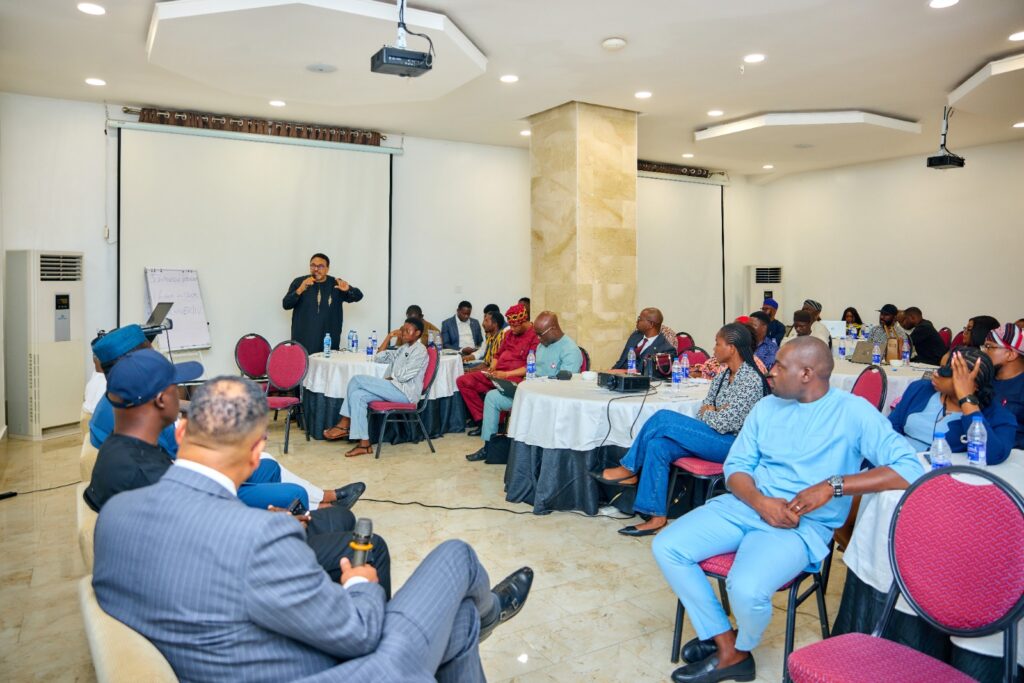
Delivering the keynote, Dr. Coker noted that AI should no longer be viewed solely as a software challenge but as an infrastructure challenge, requiring long-term investment in resilient facilities capable of supporting increasingly compute-intensive workloads.
Throughout the discussion, speakers identified power availability as one of the most significant constraints to AI-ready infrastructure. They observed that while Nigeria has improved connectivity through fibre expansion and mobile broadband, reliable electricity remains the critical enabler for hyperscale data centres, cloud platforms and enterprise AI deployments.
Dr. Sulaiman highlighted the Federal Government’s efforts to strengthen the country’s digital backbone through initiatives such as Project BRIDGE, expansion of national fiber infrastructure, government cloud platforms and digital public services. He stressed that AI readiness requires both supply-side investment in infrastructure and demand-side initiatives that encourage digital adoption across government and enterprise.
Barrister Edet emphasised that regulation should serve as an enabler rather than a constraint. He explained that the Agency is promoting collaborative regulatory frameworks, encouraging greater coordination among regulators and supporting indigenous AI innovation through initiatives that strengthen local research, digitalisation and market development.
Panelists also highlighted the need to accelerate the localisation of critical digital infrastructure, including cloud platforms, data centres and AI services, while creating stronger collaboration between government, infrastructure providers and private-sector investors.
The discussion concluded that Nigeria already possesses many of the foundational elements required to participate in the AI economy. However, sustained progress will depend on improving execution, coordinating investments across sectors and ensuring that infrastructure development keeps pace with growing enterprise and public-sector demand.
Speaking after the event, Temitope Osunrinde, Director of Africa Hyperscalers, said:
“The conversation around AI has matured. The question is no longer whether Nigeria should embrace AI, but whether we are building the infrastructure that allows AI to operate reliably, securely and at scale. AI readiness begins with digital infrastructure.”
The roundtable forms part of Africa Hyperscalers’ ongoing efforts to convene policymakers, operators, investors and technology leaders around the infrastructure priorities shaping Africa’s digital future.