
In a market often driven by announcements, projections, and speculative hyperscaler narratives, Rack Centre is positioning itself differently: execution first. The company argues that credibility in Africa’s digital infrastructure market is no longer built on ambition alone, but on the ability to consistently deliver operational infrastructure at scale.
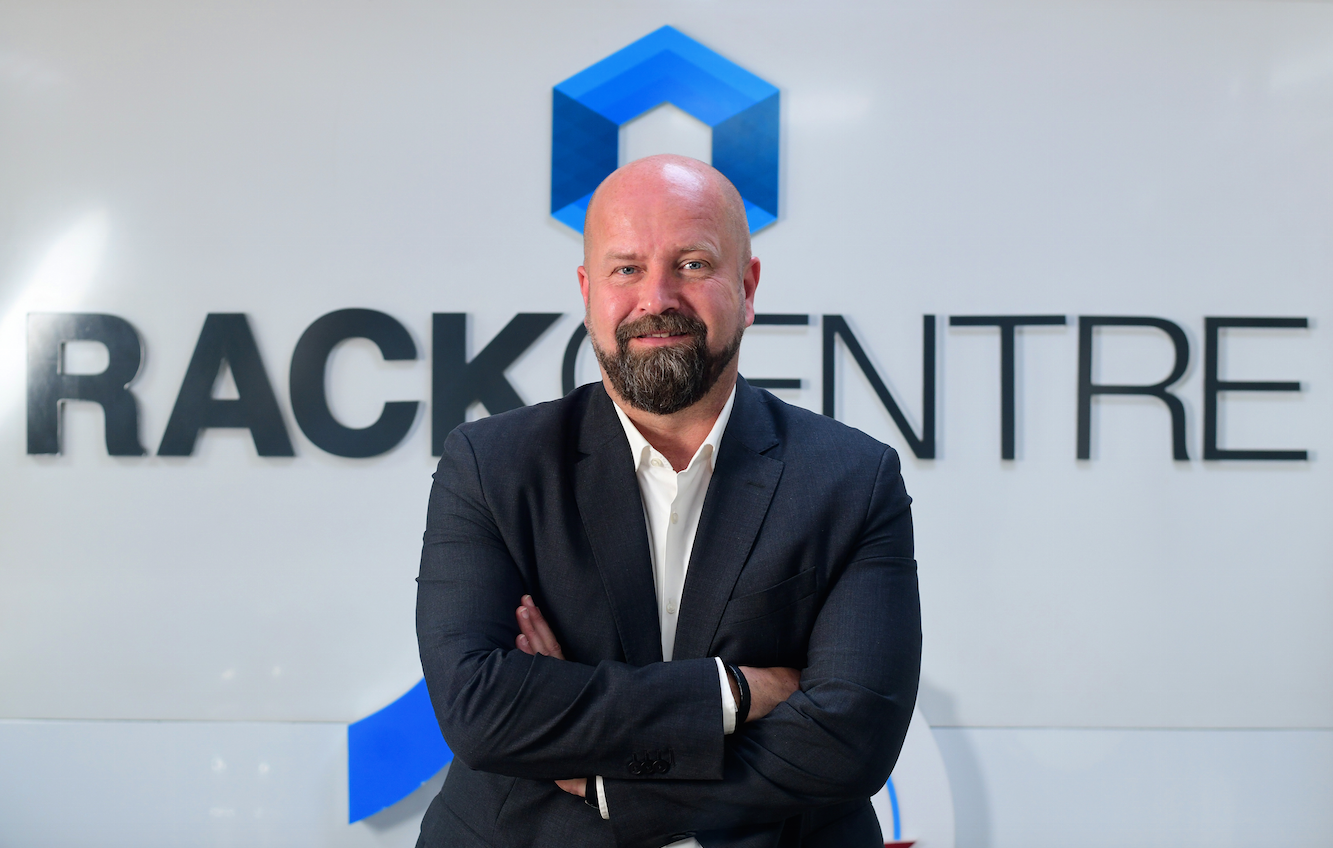
In an exclusive interview with Africa Hyperscalers, Rack Centre’s Chief Executive Officer, Lars Johanisson, outlined a long-term strategy centered not on hype, but on infrastructure delivery, operational resilience, and ecosystem development.
“One thing that makes Rack Centre stand out is that we have not only communicated what we plan to build – we have actually built it,” Johanisson said, referencing the completion of its 13.5MW Lagos platform, comprising the original 1.5MW Lagos 1 facility and the 2025-commissioned 12MW Lagos 2 expansion.
The statement reflects a broader positioning increasingly emerging within Africa’s digital infrastructure sector. As the continent’s data center industry attracts growing attention from investors, cloud providers, and policymakers, operators are under pressure to move beyond future capacity announcements and demonstrate operational execution in live environments.
For Rack Centre, the distinction is important.
The company traces its growth back to 2013, when it launched its first facility in Nigeria at a time when large-scale data center investments in the country were still considered highly speculative. Rack Centre views its current platform not as a single expansion cycle, but as the outcome of more than a decade of ecosystem development.
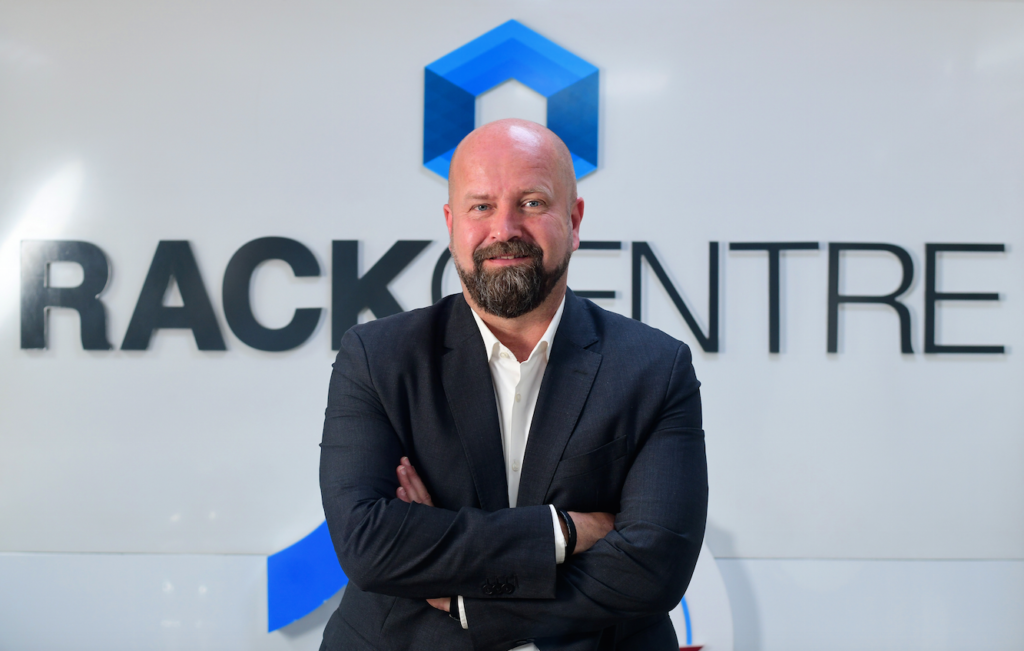
“What people see today is the outcome of years of continuous investment and client development,” Lars explained, stressing that the business was built progressively around enterprise demand, operational reliability, and interconnection density.
That enterprise ecosystem remains central to Rack Centre’s strategy today.
Unlike operators whose growth narratives are tied almost exclusively to future hyperscaler demand, Rack Centre emphasized that its platform was built around an already established local enterprise customer base spanning banks, fintechs, telecom operators, carriers, managed service providers, oil and gas companies, and government institutions.
The company was also explicit that hyperscaler engagement, while important, is not the sole foundation of its business model.
“If your business model depends entirely on waiting for hyperscalers to arrive, then you probably have a very fragile business model,” Johanisson said, arguing that sustainable infrastructure markets must first be anchored by local enterprise demand and broader ecosystem maturity.
The comment reflects a growing recognition across African digital infrastructure markets that hyperscaler activity typically follows operational certainty rather than creating it.
This pattern is already visible in markets such as South Africa, Kenya, and Morocco, where hyperscaler expansion has largely followed the development of established enterprise ecosystems, carrier-neutral interconnection hubs, and existing data center operators with proven operational track records.
According to Rack Centre, global cloud platforms and large-scale investors are primarily looking for stability, predictability, resilience, and long-term confidence before allocating capital into markets.
“What do investors want? They want stability. They want predictability. They want resilience. And they want confidence around long-term outcomes,” Johanisson stated, noting that infrastructure operators can only influence part of that equation, with broader policy and ecosystem coordination also required.
Operational consistency was another recurring theme throughout the conversation.
The company’s facilities have operated without interruption for 14 years – a record Johanisson described as foundational to Rack Centre’s operating culture.
“Uptime is not something we talk about. Uptime is a religion in this company,” Johanisson said.
The company also highlighted its focus on future-ready infrastructure design. Lagos 2 was designed around modularity and high-density readiness, with six independent halls capable of supporting both traditional enterprise deployments and future AI-oriented environments requiring significantly higher rack densities.
Lars further pointed to energy strategy as a differentiator. After migrating fully from diesel to gas generation, the company now operates Lagos 2 entirely on gas infrastructure while preparing for renewable integration through planned solar deployments.
The transition, he says, was driven not only by sustainability objectives, but by operational predictability and long-term resilience.
“The migration significantly reduced our operational exposure and improved stability,” he noted, Johanisson described the transition to gas as both an operational and strategic decision.
Despite the optimism around AI and cloud expansion, Rack Centre also adopted a relatively measured view of Africa’s near-term AI infrastructure trajectory.
The company argued that Nigeria’s next phase of digital growth still depends heavily on deeper broadband penetration, broader cloud adoption, affordability improvements, and stronger SME digitization before AI inference demand reaches meaningful scale.
“There is still enormous upside,” Johanisson said, noting that a significant share of Nigeria’s population remains outside advanced digital ecosystems despite more than a decade of broadband expansion.
He also stressed that long-term digital infrastructure growth depends on broader economic participation.
“The only way you build growth in the digital sector is when it becomes affordable for everyone to access,” he stated, pointing to affordability, cloud adoption, and SME digitization as some of the next major growth levers for the sector.
On policy, Johanisson expressed support for Nigeria’s evolving sovereign cloud and Cloud First initiatives championed by the National Information Technology Development Agency, arguing that government policy direction around localization and digitization is beginning to create stronger foundations for local infrastructure demand.
He reiterated that governments themselves can play a more direct role by digitizing public services and acting as anchor consumers of digital infrastructure.
“The biggest benefit for citizens would be a digitized relationship with government,” he said, describing public-sector digitization as one of the most important catalysts for long-term infrastructure demand.
In his projections, Lars Johanisson remains optimistic about Nigeria’s role within the continent’s digital infrastructure landscape.
“I think Nigeria already is the hub of West Africa. We don’t need to claim to become something. Nigeria already has that role automatically. It is a powerhouse in West Africa, period,” Johanisson said when asked what Nigeria must do to establish itself as a regional digital infrastructure hub.
According to him, Nigeria’s position is not simply a function of population size, but of the broader scale of its enterprise economy, digital adoption potential, and expanding infrastructure ecosystem.
He argued that the country’s long-term advantage lies in the combination of its large enterprise market, growing connectivity infrastructure, increasing cloud adoption, and the significant portion of the population still yet to be fully integrated into advanced digital ecosystems. That combination, he suggested, represents one of the largest digital infrastructure growth opportunities on the continent.
However, Johanisson noted that maintaining and strengthening that leadership position will depend on continued improvements in predictability, stability, and long-term policy consistency.
“The ongoing discussions around sovereignty, localization, and digital infrastructure development are important because they create long-term confidence for investors and operators alike,” Johanisson said, adding that infrastructure markets ultimately respond to certainty, stability, and execution.
For Rack Centre, however, sustaining Nigeria’s leadership position will depend less on announcements and more on the consistent delivery of infrastructure, policy implementation, and ecosystem development.
“This is Nigerian reality, and we build according to Nigerian realities and opportunities,” he concluded.